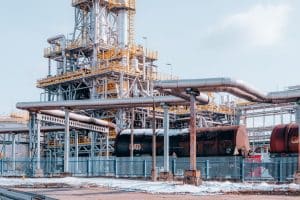
Veolia opens EV battery metal recovery plant in Amnéville, France
Veolia inaugurated an EV battery recycling plant in Amnéville, France, on Nov. 12, recovering over 90% of cobalt, nickel and copper.

Photo by Ayyeee Ayyeee on Pexels
Veolia inaugurated a new EV battery recycling plant in Amnéville, in France’s Grand Est region, on November 12, 2026, according to an AFP report carried by Connaissance des Énergies. The site uses Veolia’s own hydrometallurgical process to recover more than 90 percent of the cobalt, nickel and copper contained in “black mass,” the shredded material left after end-of-life batteries are dismantled.
Inside the new EV battery recycling plant
At full operation, the Amnéville site is designed to process between 5,000 and 7,000 tonnes of black mass a year, which Connaissance des Énergies reported as the equivalent of about 60,000 electric-vehicle batteries. Electrive, which covered the opening on November 16, cited a similar black mass figure – “nearly 7,000 tons” annually – but described it as equivalent to around 20,000 tonnes of batteries, a different unit than the battery-count figure reported by the French outlet. Both figures are reported here as stated by each source, since neither publication explained the conversion directly, and the discrepancy could not be independently resolved.
Pascal Muller, Veolia’s regional director for its hazardous waste division, told AFP the plant processed about 500 tonnes of black mass in 2026, roughly the equivalent of 5,000 batteries, as the facility ramps toward full capacity. The black mass feedstock currently comes from France, Switzerland and the United Kingdom, with dismantling handled at a separate Veolia site about an hour’s drive away, in Dieuze.
| Detail | Figure | Source |
|---|---|---|
| Annual black mass capacity (at full operation) | 5,000-7,000 tonnes | Connaissance des Énergies / electrive.com |
| Battery-equivalent of that capacity | ~60,000 batteries (AFP) vs. ~20,000 tonnes of batteries (electrive) | Connaissance des Énergies; electrive.com |
| Black mass processed in 2026 so far | ~500 tonnes (~5,000 batteries) | Pascal Muller, Veolia, via AFP |
| Metal recovery rate (cobalt, nickel, copper) | More than 90% | Connaissance des Énergies; electrive.com |
| Veolia’s projected end-of-life batteries in Europe | ~30,000/year now; ~700,000 by 2030; ~1 million by 2035 | Connaissance des Énergies (Veolia projections) |
Figures as reported by Connaissance des Énergies (AFP) and electrive.com; lithium recovery was not addressed in either source.
Policy pressure to keep recycling in Europe
Estelle Brachlianoff, Veolia’s chief executive, used the inauguration to call for a “European preference across the whole battery-recycling chain,” according to Connaissance des Énergies. Stéphane Séjourné, the European Commission’s executive vice-president for prosperity and industrial strategy, attended the event and confirmed the European Union will ban exports of black mass to non-OECD countries starting in early December 2026, a measure the French outlet said targets importers such as China and India (it would not cover South Korea).
Stéphanie Riché, who leads the circular economy for materials programme at the French Alternative Energies and Atomic Energy Commission (CEA), told AFP that if any single step of the recycling chain is missing, “the whole value chain is weakened,” pointing to China’s existing export restrictions on battery materials as a cautionary example. Yann Velluet, vice-president for battery business at Future is Neutral – a venture jointly owned by Renault Group and Suez – said end-of-life battery volumes “are not there yet” to fully supply plants like Amnéville, underscoring why Veolia’s capacity is being built ahead of the expected wave of retiring batteries.
Electrive reported that Veolia is separately pushing for additional regulatory and economic frameworks so more recycled battery material is processed within Europe rather than shipped abroad, citing an EU-funded Safeloop project study that found recycling a battery pack in Europe currently loses an average of about 1.90 euros per kilogram, driven by hazardous-goods transport costs, dismantling expenses and uncertainty over how much material can be recovered.
The Amnéville plant adds to a small but growing European base of EV battery recycling capacity. Moment Energy has separately opened a second-life EV battery megafactory in Vancouver, repurposing used batteries rather than recovering their raw materials, while GM has begun using recycled cathode material in newly produced EV batteries, a sign automakers are starting to close the loop on battery materials. In the United States, the Department of Energy has backed seven critical mineral and battery projects with $500 million in funding, reflecting a similar push to secure domestic battery material supply chains.
Background
Veolia is a French multinational utility group specializing in water, waste and energy management, operating across more than 50 countries. The company has expanded into battery recycling as electric vehicle sales have grown and the first generation of EV batteries, now estimated by the French government’s Ofremi report to last around 15 years – longer than the 8 to 10 years previously assumed by industry professionals – begins approaching end of life. The Amnéville facility is described by Veolia as its first European site using its own hydrometallurgical technology at this scale, positioned to feed recovered cobalt, nickel and copper into automotive, construction and defense supply chains in Europe, with dismantling-stage projects also under development in the UK, Belgium and Slovenia. The plant’s opening comes as EU policymakers move to restrict battery-material exports outside the bloc, a step intended to keep more of that recycling capacity – and the critical minerals it recovers – within Europe.
Sources: Connaissance des Énergies (AFP); electrive.com
Featured image: photo by Ayyeee Ayyeee on Pexels (free Pexels license).
Become a Sponsor
Our website is the heart of the mission of WINSS – it’s where we share updates, publish research, highlight community impact, and connect with supporters around the world. To keep this essential platform running, updated, and accessible, we rely on the generosity of you, who believe in our work.
We offer the option to sponsor monthly, or just once choosing the amount of your choice. If you run a company, please contact us via info@winssolutions.org.

I specialize in sustainability education, curriculum co-creation, and early-stage project strategy. At WINSS, I craft articles on sustainability, transformative AI, and related topics. When I’m not writing, you’ll find me chasing the perfect sushi roll, exploring cities around the globe, or unwinding with my dog Puffy — the world’s most loyal sidekick.