AGL’s 500MWh Abermain Battery Storage Project Clears Federal Environmental Hurdle in Queensland
AGL’s 125MW/500MWh Abermain battery in Queensland cleared federal EPBC Act review on November 17, 2026, advancing a 2.7GW storage pipeline.

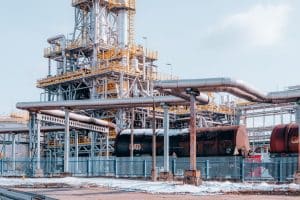
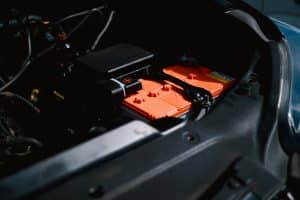
Photo by Robert So on Pexels
AGL Energy subsidiary Abermain BESS OpCo Pty Ltd secured federal environmental clearance for its proposed battery storage project at Tivoli, in the Ipswich City Council area of south-east Queensland, Construction Review Online reported on November 17, 2026. Australia’s Department of Climate Change, Energy, the Environment and Water determined the project is “not a controlled action” under the Environment Protection and Biodiversity Conservation (EPBC) Act, meaning it can proceed without a full federal environmental assessment.
What the Abermain Battery Storage Clearance Covers
The Abermain project is a lithium-ion battery energy storage system with 125 megawatts (MW) of maximum output and up to four hours of storage duration, which Construction Review Online states separately as “up to 500MWh” of capacity – consistent with the 125MW/500MWh figure AGL used when it referred the project for federal assessment, according to Enerdata. The same Construction Review Online article also states the capacity as “5000MWh” elsewhere in its text, a figure ten times the 500MWh referral capacity that neither that article nor Enerdata’s account resolves; the 500MWh figure is the one consistent across both sources and with the project’s referral filing.
The project sits at 161-173 Holdsworth Road, Tivoli, and will connect to the National Electricity Market through Powerlink’s nearby Abermain Substation, about 100 metres away, with Powerlink building the connection infrastructure. Site works include an on-site 275/33kV substation. Ipswich City Council granted local development approval for the site on November 3, 2023 (reference 12537/2022/MCU), before AGL acquired the project from its original developer, Firm Power, in 2024. AGL lodged the federal EPBC referral around October 15, 2026, according to an Australian government notice cited by Enerdata, putting roughly five weeks between the referral and the clearance Construction Review Online reported. Construction is expected to take up to 18 months, with an operating life of up to 30 years and around six ongoing maintenance staff.
AGL’s Wider Queensland Battery Storage Pipeline
Abermain is one part of a larger AGL battery buildout in Queensland. Enerdata reports AGL’s national battery storage pipeline at 5.8 gigawatts (GW), of which 2.7GW sits in Queensland. Construction Review Online names two other AGL Queensland projects in the same pipeline: Mount Britton, a 500MW/2,000MWh project at Nebo, and Tuckeroo, a 500MW/2,000MWh project at Hopeland. Neither source details the approval status of those two projects beyond naming them as part of AGL’s pipeline.
| AGL Queensland project | Capacity | Location | Status reported (as of Nov 17, 2026) |
|---|---|---|---|
| Abermain | 125 MW / 500 MWh | Tivoli, Ipswich | Federal EPBC Act clearance granted (“not a controlled action”) |
| Mount Britton | 500 MW / 2,000 MWh | Nebo | Named in AGL’s pipeline; approval status not detailed |
| Tuckeroo | 500 MW / 2,000 MWh | Hopeland | Named in AGL’s pipeline; approval status not detailed |
Background on AGL Energy
AGL Energy traces its roots to 1837, when the Australian Gas Light Company was established by an Act of Parliament to supply gas lighting to Sydney, making it, by the company’s own account, Australia’s first gas company. It became the second company listed on the Sydney Stock Exchange in 1871, began supplying natural gas to Sydney in 1976, and started trading on the ASX as AGL Energy in 2006 after a series of generation acquisitions, including Torrens Island Power Station in 2007 and Loy Yang A Power Station and its coal mine in 2012. AGL published a Climate Transition Action Plan in 2022 targeting an exit from coal-fired generation by the end of its 2035 financial year and closed its Liddell Power Station in 2023 after about 52 years of operation. It acquired battery and solar developer Firm Power, the Abermain project’s original developer, along with Terrain Solar, in 2024. The Abermain clearance adds to a Queensland battery pipeline that AGL has been building as part of that broader shift from coal generation toward storage and renewables, alongside comparable Australian storage financings such as Vena Energy’s A$1.4 billion green financing for Australian solar and battery storage and the Calibrant Energy $145 million debt facility backing solar and data-centre battery storage.
Sources: Construction Review Online; Enerdata
Become a Sponsor
Our website is the heart of the mission of WINSS – it’s where we share updates, publish research, highlight community impact, and connect with supporters around the world. To keep this essential platform running, updated, and accessible, we rely on the generosity of you, who believe in our work.
We offer the option to sponsor monthly, or just once choosing the amount of your choice. If you run a company, please contact us via info@winssolutions.org.

I specialize in sustainability education, curriculum co-creation, and early-stage project strategy. At WINSS, I craft articles on sustainability, transformative AI, and related topics. When I’m not writing, you’ll find me chasing the perfect sushi roll, exploring cities around the globe, or unwinding with my dog Puffy — the world’s most loyal sidekick.