World Bank Group Unveils $17.6 Billion Climate and Jobs Package at COP31
The World Bank Group announced a $17.6 billion climate and jobs package at COP31 in Antalya, combining $6.9bn in investment with $10.7bn in private capital.

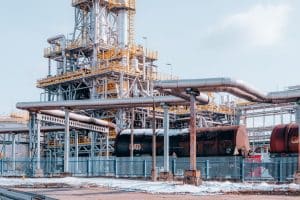
Photo by Mark Stebnicki on Pexels
The World Bank Group announced a $17.6 billion climate and jobs package at COP31 in Antalya, Turkiye, on Nov. 17, 2026, combining more than $6.9 billion in direct investment with an expected $10.7 billion in private capital mobilization. The World Bank COP31 climate jobs package spans agriculture, manufacturing, urban infrastructure and renewable energy, with named operations in Turkiye, Afghanistan and Timor-Leste, according to the Group’s press release.
What the World Bank COP31 Climate Jobs Package Funds
The package groups several already-approved or newly announced operations rather than a single new fund. In Turkiye, one operation will expand 225,000 farmers’ access to finance and markets and strengthen agricultural supply chains, supporting more than 100,000 “job equivalents,” the World Bank said. It falls under the Bank’s AgriConnect initiative, which aims to eventually reach 300 million smallholder farmers worldwide. A separate Turkiye manufacturing operation offers long-term financing so manufacturers, including small and medium-sized enterprises, can adopt greener and more digital production technologies; the Bank said hundreds of firms are expected to prepare transformation plans, again supporting more than 100,000 job equivalents.
A third Turkiye operation funds urban transport, water and sanitation improvements, targeting safely managed water and sanitation for 1.65 million people, sustainable transport for nearly 1.5 million residents and climate-resilient infrastructure for more than 3 million people. That operation sits within the World Bank’s Water Forward initiative, which aims to deliver water security to more than 1 billion people by 2030. Turkish banks are also receiving sustainable finance loans, including what the Bank described as a “blue digitally native note,” to support social inclusion, blue-economy activity, climate adaptation and the low-carbon transition.
Outside Turkiye, the International Finance Corporation (IFC) is backing an organic fertilizer facility in Afghanistan that converts agricultural waste into locally produced farm inputs, intended to support soil health and local jobs in what the Bank called a fragile market. In Timor-Leste, IFC financing, the International Development Association’s Private Sector Window and a Multilateral Investment Guarantee Agency guarantee are backing a solar power plant with battery storage that the Bank estimates will save the equivalent of 1.5% to 2.0% of the country’s gross domestic product annually in energy costs, a model it described as replicable for other small island and Pacific economies. A separate global blended finance fund, combining IFC financing, concessional funding from the Global Environment Facility and investment from international brands, targets emerging-market textile, apparel and footwear manufacturers, most of them small suppliers, to help them adopt cleaner production methods.
How the Figures Break Down
The World Bank’s release did not specify what the $6.9 billion in direct investment funds beyond the projects named above, nor did it break down the $10.7 billion in private capital by project or sector. It also did not name any World Bank Group official in connection with the announcement; the release lists only a media relations contact. The Bank did provide broader context: in fiscal year 2026, the Group said it provided $48 billion in financing with climate co-benefits and mobilized a further $48 billion in private capital, for a combined $96 billion, which it said was 21% higher than the prior fiscal year.
| Component of the package | Amount | Scope |
|---|---|---|
| Direct investment | More than $6.9 billion | Agriculture, manufacturing, urban infrastructure, renewable energy |
| Private capital (expected to be mobilized) | $10.7 billion | Linked to the same operations |
| Combined package | $17.6 billion | Announced at COP31, Antalya, Nov. 17, 2026 |
| FY2026 total climate financing (context) | $96 billion | $48bn direct + $48bn private capital mobilized, World Bank Group-wide; up 21% year over year |
The announcement follows a string of COP31 finance pledges winssolutions.org has tracked, including IFAD’s $70 million climate adaptation bond from Japan’s Zenkyoren and the “35 by 35” electrification pledge that more than a dozen countries backed at the same summit. It also follows Just Climate’s $540 million fund for agriculture decarbonization, announced days earlier, which targets similar farm-sector emissions reductions in other geographies.
About the World Bank Group
The World Bank Group is a Washington-based international financial institution made up of five organizations, including the International Bank for Reconstruction and Development, the International Development Association, the International Finance Corporation and the Multilateral Investment Guarantee Agency, which together lend to and invest in developing countries. The Group has used recent UN climate summits, including COP30 in Belem and now COP31 in Antalya, to announce bundles of climate-linked financing across agriculture, energy and infrastructure, often pairing its own lending with private capital it aims to mobilize alongside IFC and MIGA instruments. The COP31 package continues that pattern, tying new and existing operations in Turkiye, Afghanistan and Timor-Leste to the Group’s broader fiscal year 2026 climate financing total of $96 billion.
Sources: World Bank Group; Down To Earth; Hurriyet Daily News
Featured image: photo by Mark Stebnicki on Pexels (free Pexels license).
Become a Sponsor
Our website is the heart of the mission of WINSS – it’s where we share updates, publish research, highlight community impact, and connect with supporters around the world. To keep this essential platform running, updated, and accessible, we rely on the generosity of you, who believe in our work.
We offer the option to sponsor monthly, or just once choosing the amount of your choice. If you run a company, please contact us via info@winssolutions.org.

I specialize in sustainability education, curriculum co-creation, and early-stage project strategy. At WINSS, I craft articles on sustainability, transformative AI, and related topics. When I’m not writing, you’ll find me chasing the perfect sushi roll, exploring cities around the globe, or unwinding with my dog Puffy — the world’s most loyal sidekick.